Services
Different therapies for different causes of pain.
A therapy isn't chosen because it sounds good, but because it makes sense for your condition. We start with an assessment, then explain the cause of the pain, then build a treatment plan.
How we choose a therapy
There's no single method that solves every kind of pain.
The same symptom in two people can have a completely different cause. In one — muscle spasm; in another — a fascial restriction; in a third — chronic tendon inflammation. That's why we start from an assessment, not a guess.
Assessing the cause
We look at symptoms, movement, habits, previous injuries and how the body responds. The goal is to understand why the pain exists, not just where it's felt.
Treatment plan
The plan is built around the condition, not a template. It can include manual techniques, devices, needles, shockwave, massage, exercises, or a combination.
Tracking the response
What matters is how the body reacts after treatment. The plan is adjusted as needed — the goal isn't brief relief, but a more stable result.
Physical therapies
Devices and modalities that work at depth.
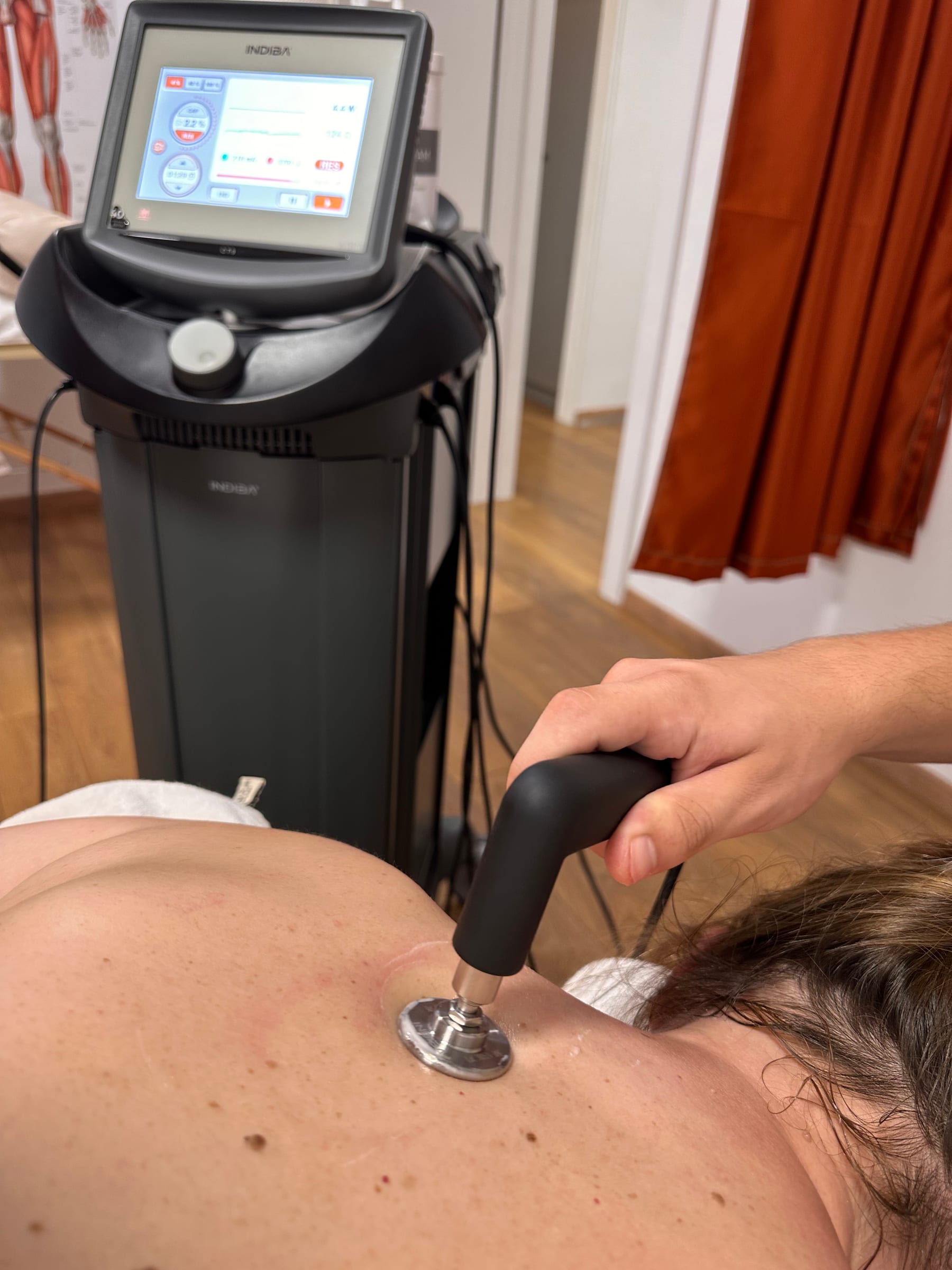
INDIBA Therapy
A premium radiofrequency therapy (Proionic® 448 kHz) that triggers tissue regeneration at the cellular level, reduces pain and speeds up recovery — from disc herniation to sports injuries.
Shockwave Therapy
Acoustic waves for heel spurs, calcific deposits, chronic tendon inflammation and pain that keeps coming back.
Tekar Therapy
Deep heating with radiofrequency energy for sports injuries, joints, tendons and accelerated rehabilitation.
Electrotherapy
TENS, interferential and diadynamic currents to reduce pain, calm inflammation and support tissue recovery after injury.
Ultrasound Therapy
Therapeutic ultrasound that penetrates 5–7 cm into the tissue, reducing inflammation, relaxing tendons and speeding up healing.
Electrical Stimulation
EMS therapy to activate weak muscles, support recovery after immobilization and prevent atrophy when voluntary effort isn't enough.
Pressotherapy
Pneumatic compression for lymphatic drainage, reducing swelling and helping legs recover after surgery, prolonged rest or athletic effort.
AWT – Shockwave Anti-Cellulite
Acoustic waves against cellulite — non-invasive breakdown of fat deposits, firmer skin and a smoother texture, with no pain and no downtime.
Manual & alternative therapies
Work with hands, needles and specific techniques.
Massage
Classic, sports, therapeutic and anti-cellulite massage as part of recovery, prevention or a combined plan.
FMK — Fascial Kinematic Method
Fascial techniques for pain that radiates, restricted movement and tension that doesn't respond to ordinary massage. Especially helpful for a herniated disc, reducing pain and tingling down the arm or leg.
Electroacupuncture
A combination of fine needles at active points and a gentle electrical impulse for pain, muscle spasm and tissue relaxation. Best suited for resolving pain and neurological conditions — herniated discs, nerve entrapments caused by spinal compression, as well as recovery after a stroke and hemiplegia (paralysis of an arm or leg).
Dry Needling
A needle technique for deep muscle spasm, neck and shoulder pain, headaches and pain that radiates down the arm or leg.
Hijama
A traditional method of controlled blood-letting for circulation, relaxation, muscle tension and supporting recovery. Also good for cleansing and supporting the body — for elevated cholesterol, fatty liver and an underactive thyroid.
Cupping
A myofascial technique using cups and suction (vacuum) for muscle tension, restricted movement and recovery — without an incision or blood-letting.
Not sure what you need?
That's normal. That's why a check-up comes before a plan.
Patients often come in with the idea that they need a massage, shockwave or dry needling because they heard it helped someone else. That may be true, but it doesn't have to be the right choice for your problem.
If the pain has lasted a long time, comes back after brief relief, spreads down the arm or leg, comes with tingling, restricted movement, or pain during training — it's smartest to first check the cause. Only then does therapy stop being a guess and become a plan.